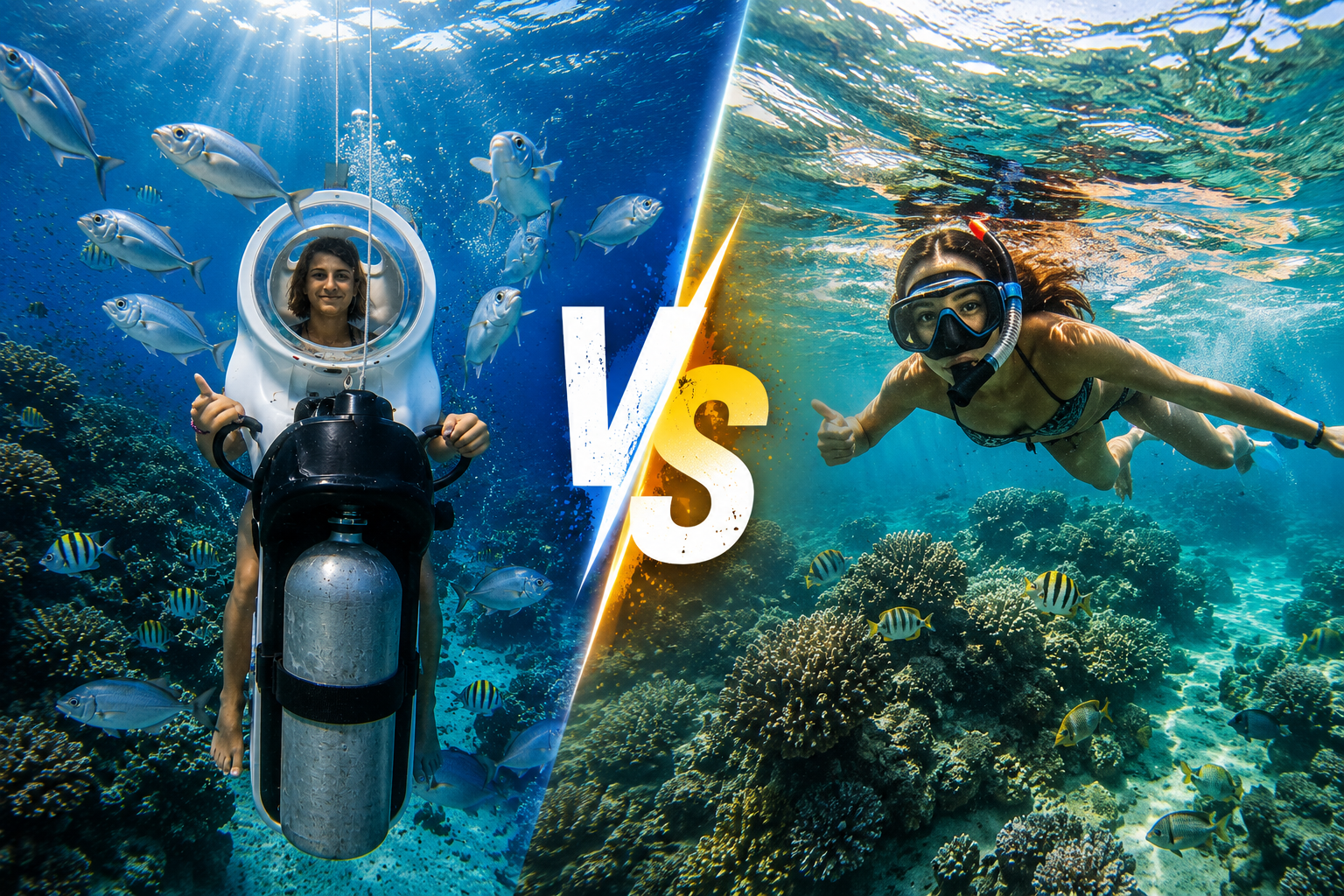
If you have seen both Scuba Doo and traditional scuba diving listed as options for your trip to Punta Cana, you might be wondering how different they really are. While they share a similar underwater appeal, the experience, preparation, and depth involved are quite different. This guide breaks down exactly how they compare so you can choose the right one for your trip.
What Is Scuba Doo?
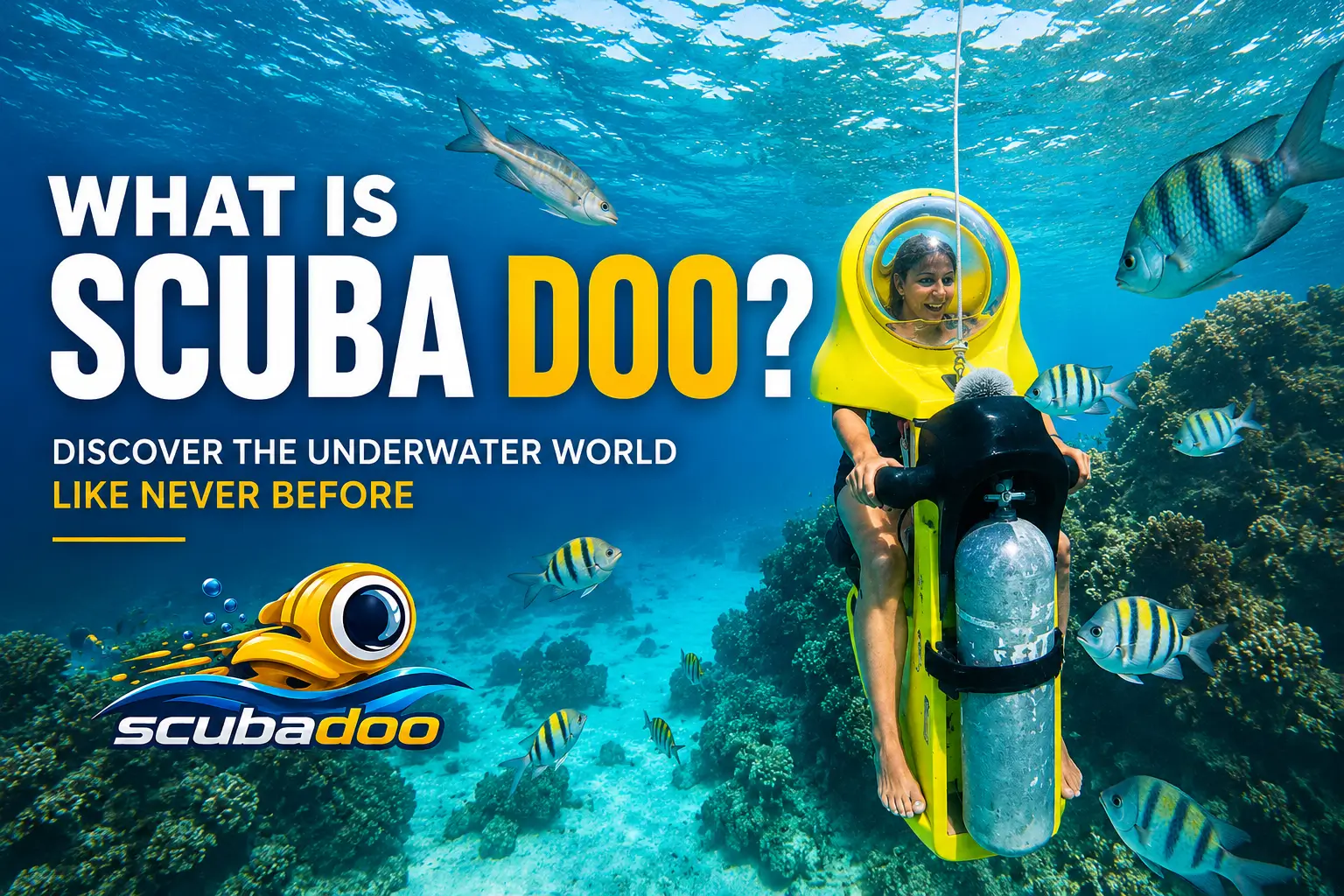
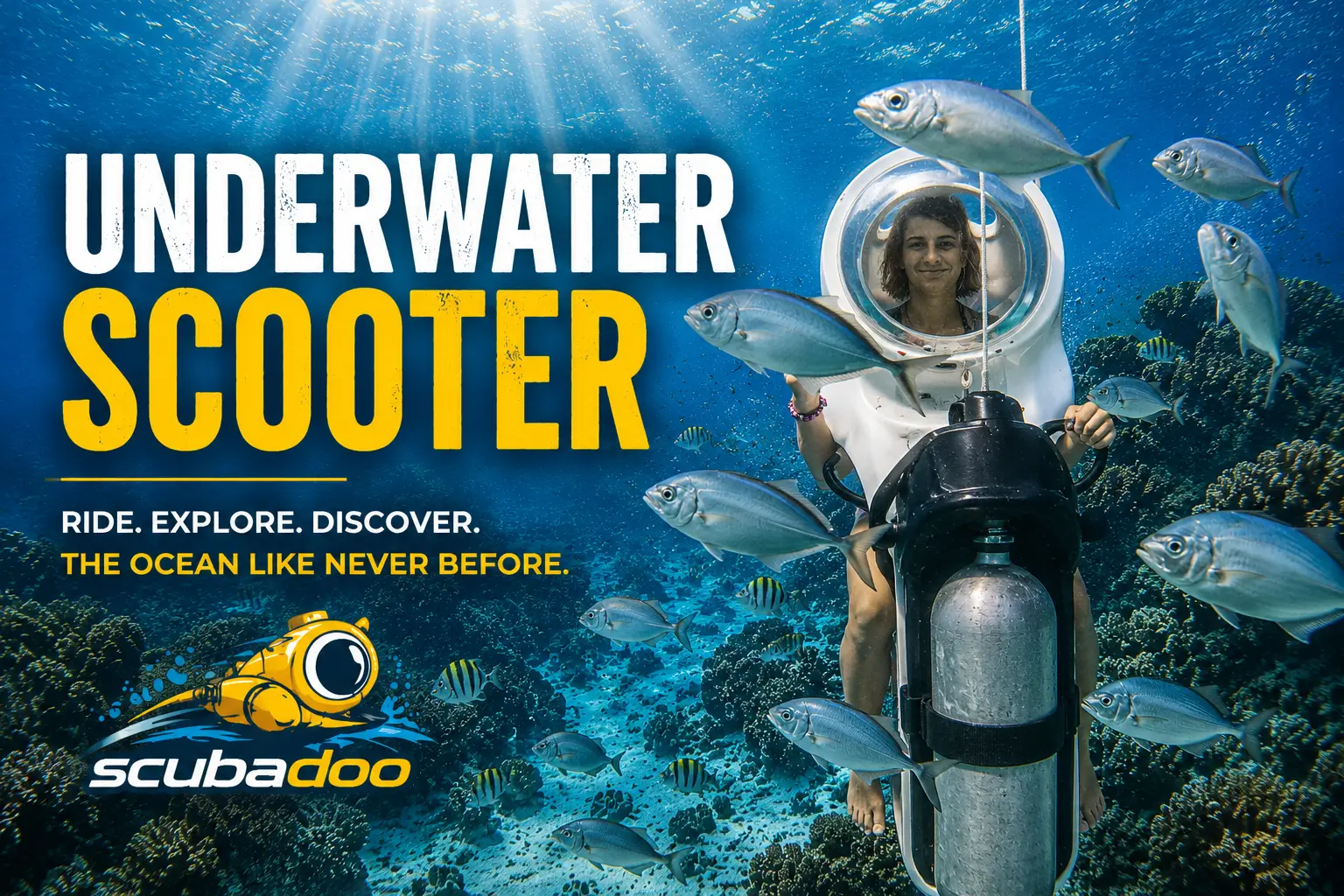
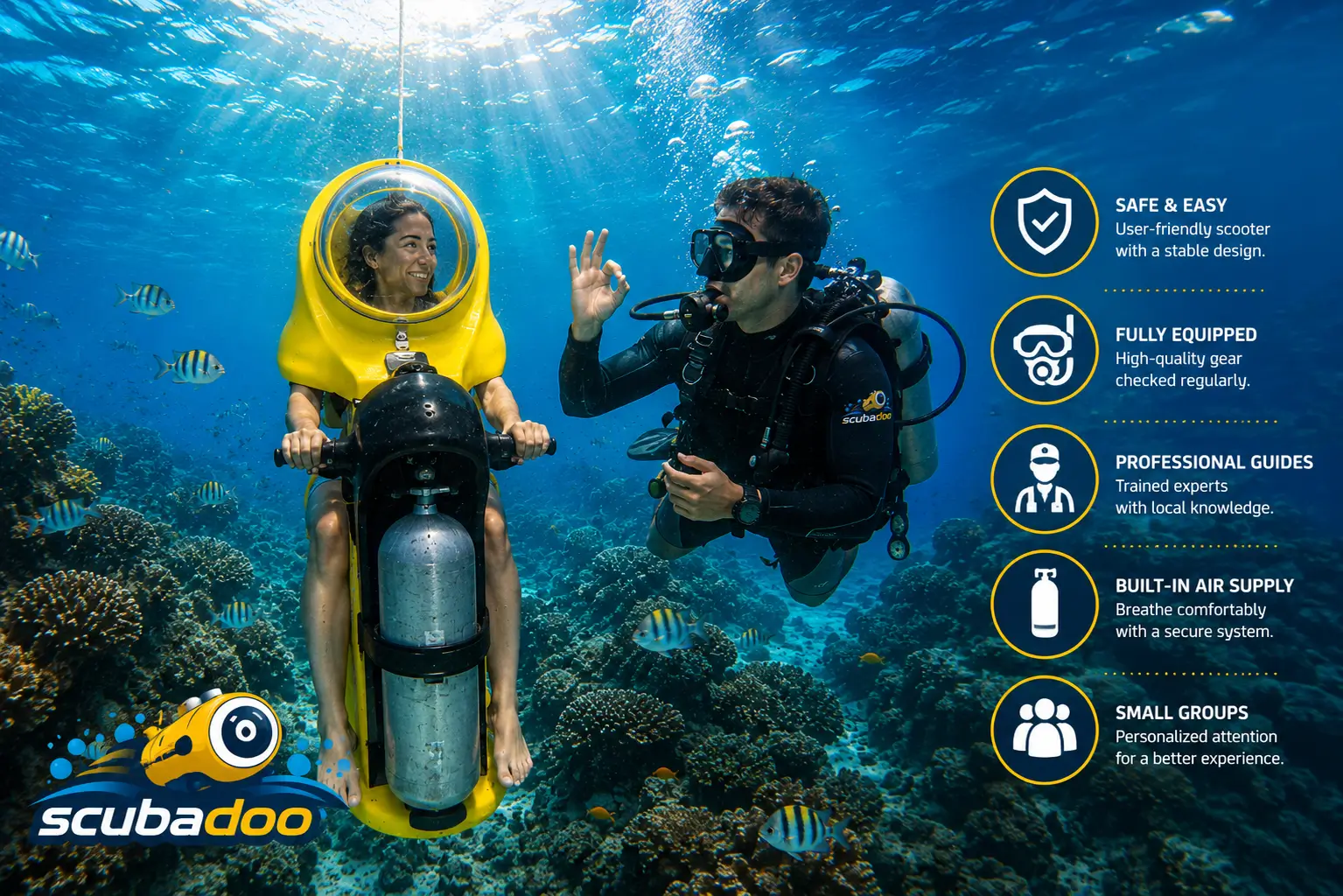
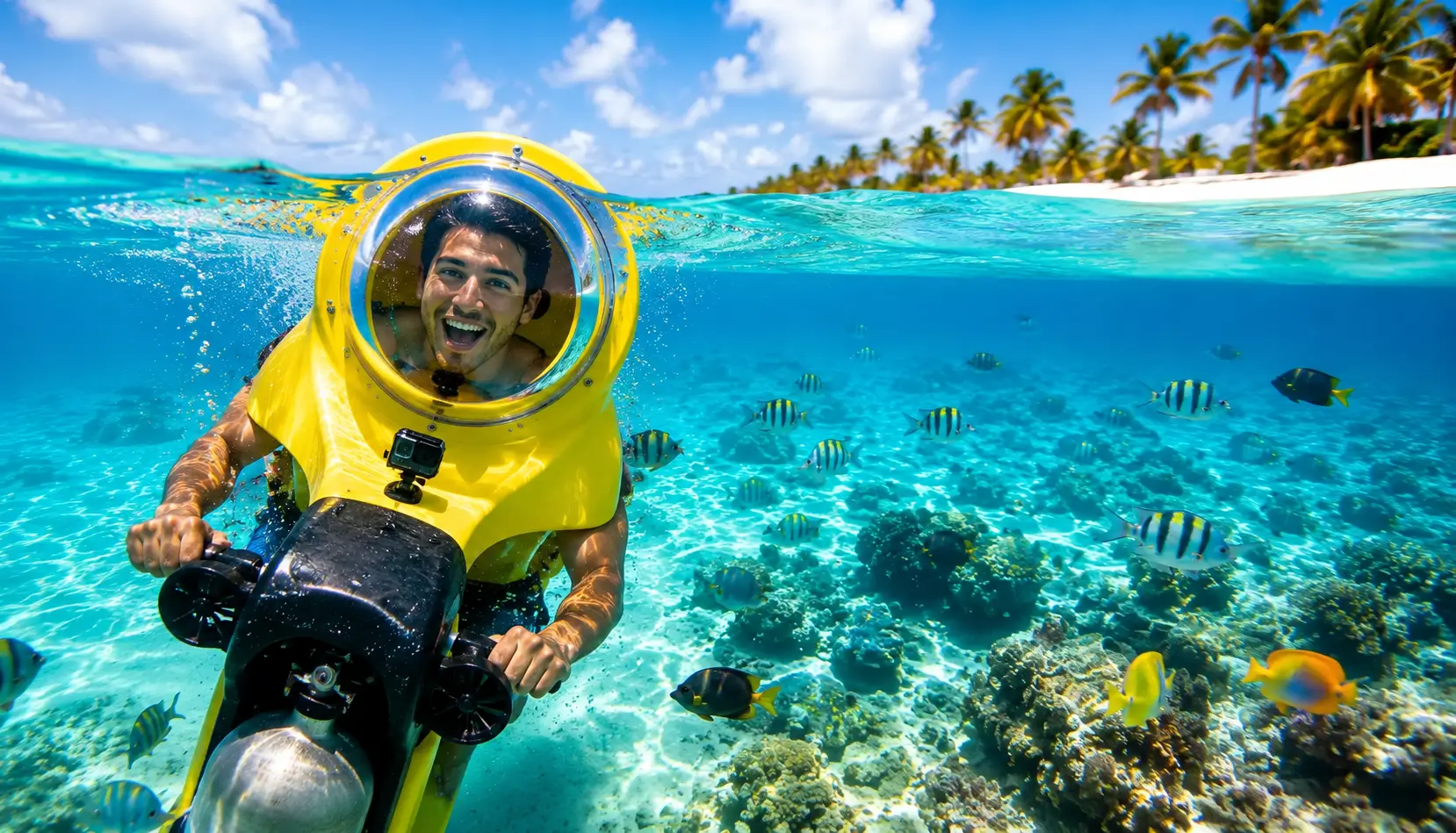
Scuba Doo is an underwater scooter experience that lets you explore the ocean floor without needing a diving certification. Each scooter is paired with a sealed helmet connected to a surface air supply, so you breathe normally while steering yourself along the seabed. There is no training course required beyond a short briefing before the tour.
What Is Scuba Diving?
Scuba diving involves wearing a tank of compressed air on your back along with a regulator, mask, and fins, allowing you to swim freely underwater at greater depths. Recreational scuba diving typically requires a certification course, such as PADI Open Water, which covers buoyancy control, equalizing pressure, and safety procedures before you can dive independently or with a guide.
Key Differences Between Scuba Doo and Scuba Diving
Certification Required
Scuba diving requires a recognized certification course before you can dive, even with a guide in many cases. Scuba Doo requires no certification at all, just a short safety briefing before entering the water.
Depth
Certified recreational divers often descend beyond 30 feet, sometimes much deeper depending on certification level. Scuba Doo stays shallow, typically between 10 and 20 feet, which keeps the experience accessible and reduces pressure related risks.
Equipment
Scuba diving requires a tank, regulator, weight belt, and often a wetsuit, all of which add weight and require some familiarity to use correctly. Scuba Doo uses a motorized scooter and a sealed helmet, which handle movement and air supply without requiring you to manage any equipment yourself.
Skill and Experience Needed
Diving requires learning skills like equalizing ear pressure, controlling buoyancy, and managing air consumption. Scuba Doo requires none of these skills, since the scooter and helmet are designed for complete beginners.
Time Investment
Getting certified to dive typically takes a full day or more of classroom and pool training before your first real dive. Scuba Doo only requires a short briefing, so you can be underwater within the same hour you arrive.
Cost
Certification courses are a separate, often significant cost on top of any guided dives. Scuba Doo is booked as a single tour with no additional training costs involved.
Which One Lets You Go Deeper?
Scuba diving allows significantly greater depth, since certified divers are trained to manage the physical effects of descending further underwater. Scuba Doo intentionally stays shallow, which limits depth but also removes most of the risks associated with deeper diving, making it a simpler trade off between depth and accessibility.
Which One Is Better for Beginners?
For someone with no prior experience and limited time, Scuba Doo is the more practical choice. It removes the certification requirement entirely and gets you underwater the same day. Scuba diving is better suited for travelers who already have time to invest in certification, or who are looking to build a long term skill rather than a one time experience.
Can You Do Both on the Same Trip?
Yes, some travelers choose to try Scuba Doo for an easy, low commitment experience and later pursue scuba certification if they enjoyed being underwater and want to go further. There is no conflict between trying both, since they serve different goals and require different levels of commitment.
Ready to Try Scuba Doo in Punta Cana?
Scuba Doo Punta Cana offers the original underwater scooter tour, with no certification required, hotel pickup included, and easy online booking. If you want an underwater experience without the time and cost of a diving course, you can check availability and reserve your spot directly through our booking page.
Book Your Scuba Doo Tour Now